Showing posts with label pruning. Show all posts

Sunday, March 7, 2021

Do's and Don'ts for March

 March is a cruel mistress. She teases with sunshine and warm weather and then drowns you in a snow storm. Don't assume anything in March. However, if you're like me, you just can't wait to get outside

Crocuses will start to bloom in March

and get busy and there ARE a lot of things you can do. Here's a list of Do's and Don't s for this month. 

DO clean up your yard. I know, I know it's not fun but it is necessary. Winter winds blow trash around from who knows where. You're kids have left toys out. Leaves have blown up in piles by the fence. Your herbaceous perennials are mounds of dead leaves and stems from last year. Now is the time to clean it up. Just like the inside of your house, it's much better to decorate the outside when you start with a clean slate. Trash (and some toys) gets tossed. All those dead leaves can go in your compost bin. 

DON'T plant anything heat loving. Just because it's going to hit 70 degrees later this week doesn't mean you can plant out anything that's frost intolerant. Tomatoes, beans, cucumbers, squash, melons and peppers cannot be planted outside till the last frost date which for York County, PA is around May 1st. 

DO apply fertilizer as needed. Now is a great time to feed your trees and perennials. You can also add amendments to your vegetable garden. Ideally, you'll get a soil test done and follow the recommendations. Most of us can benefit from an application of an organic, complete fertilizer and you can never have too much compost. 

DON'T prune anything. It's too late to do your winter dormancy pruning and for the vast majority of plants, spring is the worst time to prune. Unless you know for a fact that your specific plant is one of the rare exceptions, hold off on any pruning till at least the summer. Right now, the plants are putting lots of energy in sprouting buds and it's really hard on them to have many buds pruned off. 
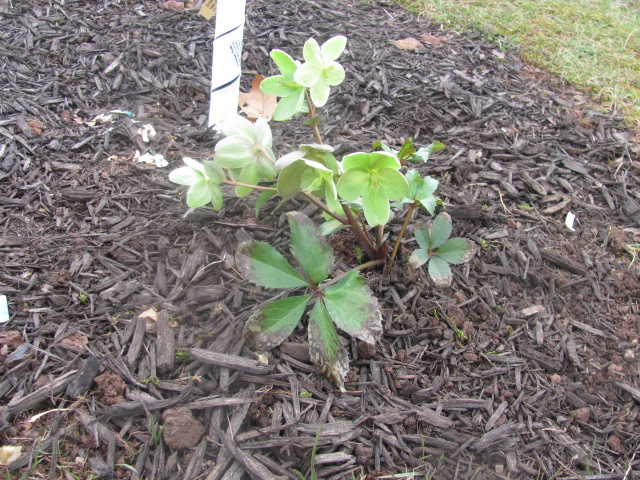
Helebore are a beautiful early spring flower. 
DO start planting some spring veggies. April 1st is really the safe time to plant cool weather crops but sometimes March will pull through and you can get salads a few weeks earlier. The worst case scenario is that you'll be out a few seeds. To increase your chances, plant in a cold frame. I plan on planting lettuce, spinach, carrots, peas and sweet peas this month. Keep you eyes on the forecast. 

DON'T use any pesticides outdoors unless you absolutely must and the packaging specifically says it will work when nighttime temps are below freezing. The vast majority of herbicides and insecticides will not work when it's this cold. Besides, the bugs aren't out yet to threaten you anyways. I'm not a fan of pesticides in general but in March they just don't make any sense. 

There's my list of dos and don'ts for you. What projects are you tackling this spring? Feel free to
comment below. 

Thursday, February 25, 2021

What You Need To Know About Pruning

Hedge Sheers, for formal hedges only!
 Pruning is an art and a science. There are some hard and fast rules but also a subjecting sense of doing what feels right. You can read books and books about pruning and get overwhelmed with information. If you have any woody shrubs or trees on your property, here are some basic rules to get you started. 

First, use sharp, clean tools. I good pair of by-pass hand pruners will go a long way. For larger branches, you may need a lopper. You can easily find these at any hardware store. It's best to sanitize your tools between plants so you don't spread any pathogens from plant to plant. One tool you should use sparingly are hedge sheers. The only woody plants you should ever use them on is formal hedges. They are really hard on plants and the only reason you can use them on formal hedges is because yews and boxwood are hardy enough to handle the abuse. 

Second, you can always prune out the three D's - dead, diseased or damaged. If you see this on your plant any time of year, go ahead and prune them off. 

2 Branch Collars
Third, always leave on the branch collar when you prune a branch off. The branch collar is the swelling of wood at the base of a  branch and it's natures way of keeping pathogens from getting into the larger branch or trunk. (see picture). 

Fourth, buy the appropriate sized plant for the space available. If you purchase a rhododendron that wants to be 15 feet high and plant it under your living room window, you will be fighting with it forever. Trying to keep a plant smaller than it wants to be requires more effort than most people are willing to put in. So, measure your space and buy a plant that won't need to be controlled for size. 

Finally your best bet is to always know the proper ID of your plant and then research it's specific pruning needs. You don't need to know how to prune pine trees if there are no pines on your property. You can just learn how to take care of the plants you have. 

Plants in general are hardier than we give them credit for. Most will over come a pruning mistake or two. So don't be afraid to take care of your plants. Educate yourself and then do it! For further reading...

https://extension.psu.edu/pruning-shrubs-and-trees

https://extension.psu.edu/programs/master-gardener/counties/lackawanna/news/2015/to-prune-or-not-to-prune-it-all-depends-on-flowering

Sunday, February 18, 2018

Gardening in Late Winter/Early Spring

As I write this, there are a few inches of snow on the ground but in two days the temps are supposed to hit 70 degrees. Central Pennsylvania in late Winter I suppose. It's on those random, unusually warm days that you really want to get out of the house and do something but it's way too early to be planting a garden. (Here, near Harrisburg, PA, I don't plant anything till St. Patrick's Day, if you want to know.) However, that doesn't mean there's nothing to do outside! Here are some great ways to make use of a warm February afternoon.

1> Pick Up Trash. I know, I know, it's not fun but it needs to be done. Winter winds will blow around trash and it will land in your yard. March can be an ugly time of year, not because of the mud, but because of all the garbage lying around that the melting snow revealed. So go pick it up. In your own yard at least.

2> Turn Your Compost Pile. You can be adding kitchen scraps and other compost to your bin all winter so when the pile thaws out, give it a good mixing to encourage it along. What? You don't have a compost bin? Get one (or build one)! Composting is a no-brainer way to turn garbage into useful garden soil.


3>Clean our your bird houses. It's nice to leave them up during the winter to provide shelter for birds but now is a great time to clean them out to start fresh this Spring. No need to scrub, just empty them out.

4>Rake up any leaves you left from last fall. In fact, if you can, shred them with your mower and then put them on your compost pile, or you can use them as mulch in some of your garden beds. 

5>While your at it, give your lawn mower any annual maintenance it requires so it's ready to go when the grass is long.

6> Start preparing any garden beds for Spring planting. My vegetable garden was well manured and mulched last fall so I'm not worried about it now. However, I have a shipment of plants coming this week so I've been getting the beds ready for them. (Digging up sod, fertilizing, laying down cardboard and mulching over that if you want to know.)

7>Cleaning out your garden shed. Yeah, I'm a hypocrite about this right now as you can barely get in ours but hey, you can organize your garden shed!

8>Hurry up and do any pruning you haven't gotten to yet. It's best to prune most trees and bushes  while they're still dormant. Once you see fresh buds coming out, it's really too late. However, many different shrubs have unique pruning needs so be sure to look up guidelines for your specific plant.

So, there are my suggestions for how to best utilize warm, late winter days. What do you do when the snow melts? Feel free to post in the comments below.


Monday, January 1, 2018

6 Ways To Feed Your Gardening Habit in the Winter

As I'm writing this post, it's pretty darn cold outside for central PA. Now that the holidays are over, I'm ready for spring! If your favorite hobby involves a green thumb, then January and February can be a bit of a downer. Here are a few ways I enjoy gardening in winter.

1. Order some free seed catalogs and check out all the cool varieties you can grow in your garden this year. Some of my favorites are (and I'm not being paid anything from them) Baker Creek Heirloom Seeds, Territorial Seeds, and Stark Brothers Nursery .

2. Plan your garden and set goals! Once you see what's available, you can draw out a rough sketch of your garden and plan out what you want to grow. You can try out a new variety of vegetable or flower or a new way of cooking or preserving your produce. One of the things I love about gardening is that there are always new things to learn about and try. Which leads me to my next point...

3. Spend some time this winter reading up on an aspect of gardening you're interested in. You can find lots of great articles at www.motherearthnews.com or check out this blog post I wrote on some books I recommend.

4. Enjoy a houseplant or two. There are countless varieties available at your local garden center. One of my favorite ideas is to grow an herb plant such as basil or parsley that will also provide a welcome freshness to your winter cooking.

5. If  you get some unusually warm days, as we typically do here in central pa, you can take the opportunity to get some minor hardscaping done. For instance, I know I'd like to create a simple fence around my raspberry canes off the ground so it's easier to mow around this year. As long as the ground isn't frozen, I should be able to get that done when I get time. I also have at least one place where I'd like to take out the grass and add mulch and stone. It's not as much fun as growing stuff, but it will save me time in the Spring.

6. Pruning is a common winter practice. If you have fruit trees and bushes, rose bushes, or brambles, then you'll need to spend some time pruning them this winter. Find more information about how to prune, check out this post.

So, there are my six best ideas to enjoy your winter. How do you enjoy gardening when it's too cold outside?

Thursday, May 4, 2017

Everything You Need to Know About Lilacs


A big thanks to my lovely mother in law, Cathy, for this weeks post. She sent me home yesterday with not just a big bouquet of cut lilacs but also with a section of her lilac bush to grow in my own yard. Lilacs are a sentimental and traditional flower grown in both my family and in my husbands family. The particular bush mentioned above was originally grown by my husbands great grandmother and now part of it will be enjoyed daily by my daughter as well.

Aside from sentimental reasons, lilac is a great bush to grow in your yard. The smell of fresh lilac flowers is absolutely to die for and even when the plant is done blooming for the year, it can still provide a nice privacy screen and habitat for wildlife.  As you can see, the blooms make a lovely cut bouquet in the house.


This plant is looking a little wilted because I had just
transplanted it. With time, it should do quite well here.
You can buy a lilac bush or get part of someone else's bush as I did. Spring and Fall are the best times to transplant a lilac bush. They prefer well drained soil in a sunny spot and may need some watering for a while after planting. However, once your bush is established, it will be very low maintenance. When established, I prefer to look the plant over towards the end of summer every year to prune out any dead branches but that's it.

If you're buying a new plant from a nursery, you may want to consider a "bloomerang" variety as they will re bloom again in the fall. One of my neighbors has a great specimen and it was quite surprising to notice it and enjoy the smell of fresh lilacs in October.

Do you grow lilacs in your yard? Do you have other sentimental flowers that you grow? Feel free to write about it in the comment section below.

Thursday, March 2, 2017

Planting Fruit Trees: The Basics

You've ordered your fruit trees (if not, you'll want to get on that soon) and are waiting for them to arrive. Or, you're planning on going to a local nursery soon to buy some. If you're getting a bare root plant, and you should, then here is how to plant them when they arrive.

First, what you should have on hand ahead of time: A round pointed shovel, five gallon bucket, half a bag of composted manure per tree, half a bag of bark mulch per tree, and tree guards. All of these items are available at your local garden center although they looked at me pretty funny when I stopped by for manure in January. Oh, well.

Any decent company will include planting instructions with the trees but just in case (or as a suplement) here is how I planted my trees last week.

1. As soon as the trees arrive, remove all packaging and put them in a 5 gallon pail to soak roots for 4-6 hours. Be sure to plant them ASAP, as in, same day if at all possible.


2. I had plotted out my location for the trees ahead of time so while they were soaking, I dug the hole: removing all the grass in a 2 foot radius from where I wanted the tree. I then dug down deep enough to more than allow for the size of the root ball. (you can take a tree out of the water for a few minutes to use it to measure).


3. If any or the roots were damaged in transit, you can prune off the damage with hand pruners. Otherwise, just plant your tree. Pack the dirt in somewhat firmly around the roots and stop about 2/3rds of the way up to add water and help the soil settle around the roots. Also, be sure to not bury the graft line. All fruit trees are grafted unto rootstock and you do not want to bury where they are joined. It's pretty obvious when you get the plant.

4. You do not need to amend the soil around the tree in any way, In fact, it's better for the tree if it is allowed to adjust to the native soil as soon as possible. However, in order to provide some extra nutrients, I spread out half a bag of composted manure (available cheaply at any garden center) over the hole I dug. As it rains, the nutrients will seep down to the roots. Because I highly object to weeding, I also spread wood bark mulch over that.

5. When that's done, be sure to put a tree guard around the base of the tree to protect it (you'll have to remove it after a year or two so it doesn't choke the tree) and give the tree a thorough watering to get it started.


That's it! You're on your way to home grown fruit in a few years. Be sure to keep in watered during dry spells those first few years. Pruning is also important but that's for another post. I highly recommend "Grow A Little Fruit Tree" by Ann Ralph for more information. What kind of fruit trees are you growing?

Thursday, January 12, 2017

Necessary Pruning for Beginners Part 2

So, in the previous post we talked about removing suckers from your tree. You are completely capable of doing two other kinds of pruning cuts on your small or ornamental trees. So grab your pruners and read on.

First, if a branch has been broken, damaged or diseased in some way, then it ought to be removed. If it's a large limb requiring a ladder, then you should call in the professionals. However, if you can reach it from the ground, then go ahead and remove the branch from its base, cutting it flush with the trunk so it doesn't leave a stub. You can do this any time of year as you don't want any disease to spread.

Second, you may have a tree in your yard that is hard to mow under because the branches are too low to the ground. How annoying! We had that issue with the ornamental cherry tree that came with our backyard. We love it but were getting whacked in the head all the time. As you can see in before and after pictures, I just went around and cut away all of the smaller branches that where angled downward. I only needed a small chainsaw for one larger branch that just needed to go. The rest where small enough to use pruners. If too-low branches are driving you nuts ever time you have to mow under them, then now is the best time to get out there are clean it up.


Don't be nervous! Trees are tougher than you think. Even if you over prune a bit, the tree will bounce back in time. As I said in the previous post, you don't need to put any kind of a sealant on the cuts as the tree will heal itself. Also, for more info, check out "Grow A Little Fruit Tree" by Ann Ralph.

Wednesday, January 4, 2017

Necessary Pruning for Beginners Part 1

If you own a yard with a tree in it, then you need to read this post. Pruning can be intimidating but you don't need a special class to do some basic cuts that will improve the health and appearance of your tree. That being said, if you have large trees (over 20 feet tall for our purposes) that need limb removal, please hire professionals. People get hurt all the time from climbing up into trees with chainsaws. 

For those of you with fruit trees, ornamental trees, or trees that are still young, you may have noticed "suckers" -small branches growing from the base of your tree. These branches are not desirable for either the appearance or health of the tree and should be removed. You can do this any time but winter is the traditional time for pruning in northern climates as the tree is dormant.

Start with clean, sharp pruners and cut as close as possible to the trunk of the tree so you don't leave stubs. You don't need to use any kind of sealant as the tree can heal by itself. I recommend you check over all your trees once a year because the larger the suckers get, the larger the scab will be on the tree. You don't want your ornamental trees to resemble the very neglected crab apple in the picture.


Also, if there are other small branches growing from the trunk below the scaffold (the place where the first main branches separate from the trunk) you can also remove them while you're at it.


Don't be nervous! You can totally do this and it will be great for your trees. For more information, particularly on fruit trees, I recommend "Grow A Little Fruit Tree" by Ann Ralph.